
 +86 13157971785
 kevin@yunintl.com



Wholesale Sunglasses Specification: Fit, Frame and Lens Details
October 27, 2026
A wholesale sunglasses specification should explain more than the frame color and the word oversized. Similar-looking products can differ in lens opening, bridge shape, temple construction and fit. A useful brief separates those choices and gives each one a reference. It also separates what the photographs show from the information needed to support any proposed lens or performance claim.
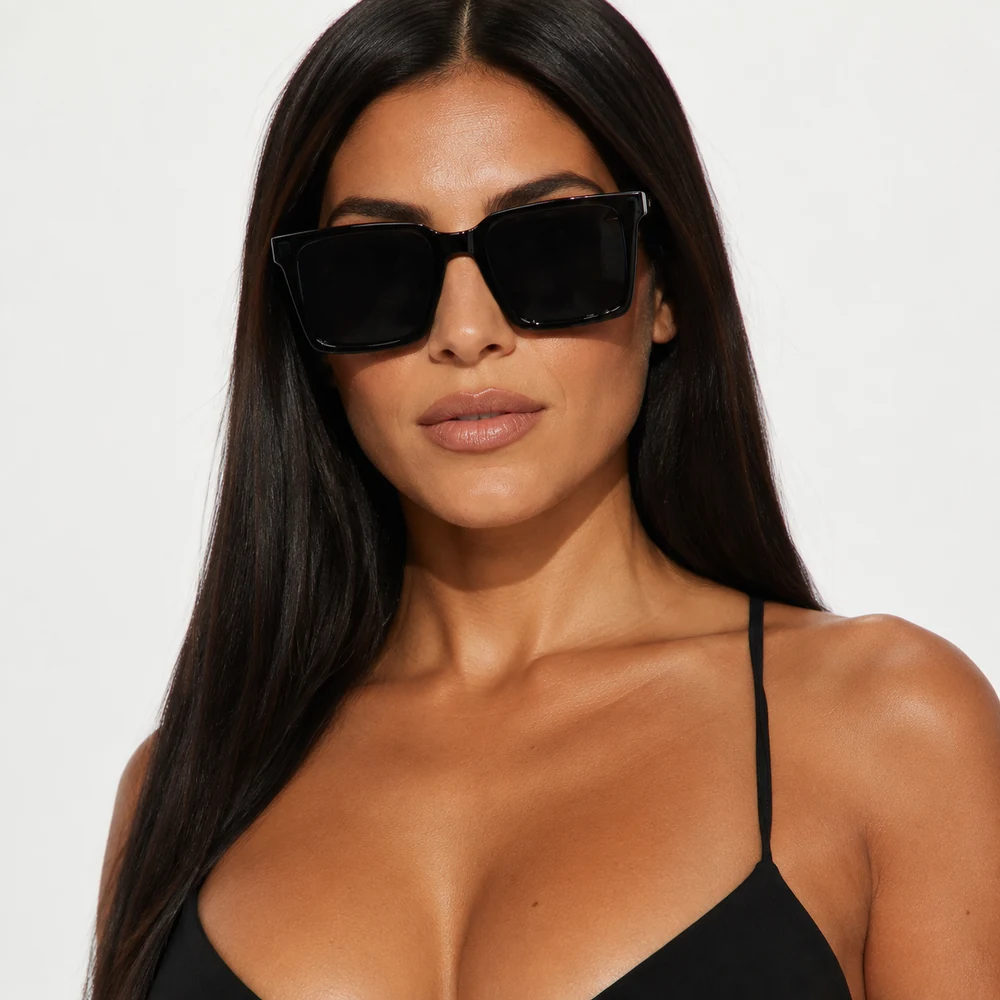
Describe the frame beyond a style name
Start with the selected product link and clear front, side and angle views. Describe the upper rim, outer corners, lower lens outline and temple shape. Square, shield and cat-eye are useful categories, but each contains many variations. Mark the exact feature you want to retain when using more than one reference image.
The black oversized square sunglasses with translucent frame detail have a broad upper rim, softened corners and wide temple sections. The wearing images read as dark, while the isolated views reveal a blue-gray translucent appearance. Record both views so a quotation request does not accidentally turn the selected frame into an opaque version.
Keep the frame material separate from its color. This listing identifies a plastic frame; the color and translucency are additional details. If another material is proposed for a new project, ask for its identity and the relevant sample rather than assuming two frames with the same appearance have the same construction.
Use consistent measurements for fit review
Ask for frame width, lens dimensions, bridge measurement and temple length with a drawing that shows the measuring points. For a broad curved frame, clarify whether a width is measured as a straight line or along the surface. Consistent measurement methods are necessary before comparing alternative samples.
During sample review, observe the bridge position, temple contact and how the frame sits when the wearer looks down or turns. Use more than one adult fit reference when your intended customers span different face shapes. Record the observations without translating a limited fitting session into a claim that the frame fits everyone.
A model portrait is helpful for merchandising scale and proportion. It cannot provide the full fit information: a photograph may hide temple pressure, bridge contact or movement. Use the portrait to communicate the intended silhouette, then use the physical sample and dimensions for fit decisions.
Keep lens appearance and performance separate
Specify the lens appearance you want: visible color, gradient direction, mirrored appearance or another finish shown in your reference. Compare samples under the same conditions because lighting and background affect photographs. Request the chosen lens description in the quotation so the selected appearance has a written reference.
Dark lenses, a fashionable shape and a product name do not establish a UV, polarization or other performance claim. If a claim is part of your buying brief, state it explicitly and ask for relevant supporting information for the exact product and lens version. Review the evidence before adding the claim to a retail listing.
Keep optical or prescription requirements separate from a fashion frame request. A standard-lens product listing should not be treated as confirmation of a prescription service or a particular technical capability. Explain your intended product use at the start so the sample request matches the project.
Review hinges, edges and presentation
Compare temple alignment, hinge movement and the frame edges on the sample. Photograph the front and side before recording comments so each observation can be located. If you want a particular opening movement or an agreed construction check, include it in the review plan rather than approving a broad durability statement after an informal trial.
List what is included in the retail unit. A sleeve, pouch, case or cleaning cloth should appear as a requested item, not as an assumption based on another supplier’s photograph. Review any logo location and presentation artwork separately from the frame so the approved design remains identifiable.
Build a comparison sheet that preserves the differences
Place product code, frame material, appearance, measurements, lens description, supporting documents and included items in separate columns. Leave room for sample observations and proposed changes. A clear comparison makes it easier to select the intended product instead of choosing on a single front photograph.
Browse YUNINTL sunglasses for shape references. For a different project, use the reading and blue-light glasses category as a separate starting point. Send your selected frame links, fit requirements and lens specification to YUNINTL for a focused sourcing discussion.




