
 +86 13157971785
 kevin@yunintl.com



Chain Belt and Body Jewelry Fit: What Buyers Should Measure
November 10, 2026
Chain belt fit measurements should describe where a piece can fasten and how it is intended to sit. A total chain length or a model photograph is useful, but neither provides a complete fit guide. Body jewelry adds another question: the relationship between several chains and the garment opening. Review those dimensions together before preparing a customer-facing size description.
Separate overall length from fastening range
A decorative chain belt may include a front ornament section, connecting links, a clasp and a hanging tail. Record the overall length and the positions where the clasp can attach. Identify the first and last intended fastening points so the usable range has a clear meaning.
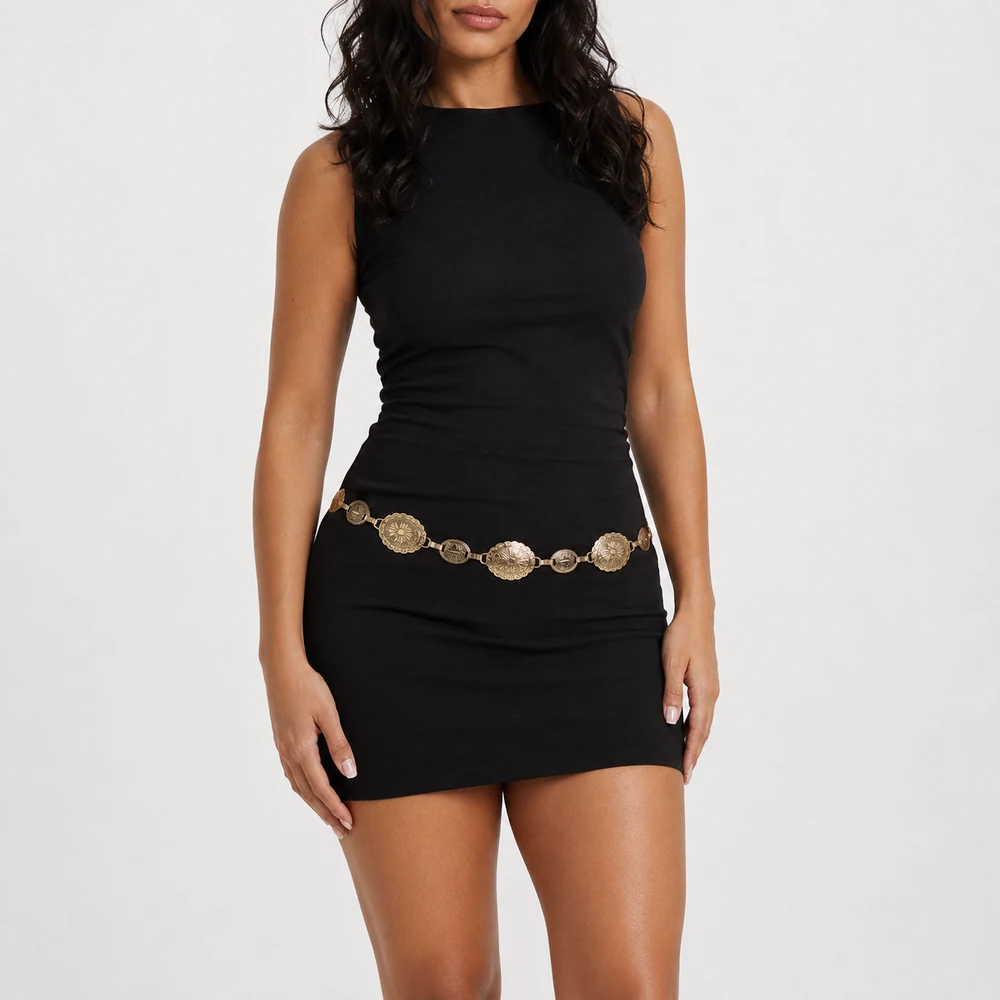
The gold-tone medallion chain belt is listed with a lobster clasp and a length of 46 inches. Its alternating round ornaments form the decorative front. That overall length should not be presented as a complete waist-size range without checking the actual fastening arrangement and the preferred wearing position.
Use a drawing or laid-flat photograph with the measurement path marked. State whether the clasp is included in the overall measurement. When comparing samples, follow the same method so a difference in reported length does not result only from measuring different parts.
Review the intended position on the outfit
Specify whether the belt is meant to sit at the waist, lower on the hips or over a particular garment. The circumference at each position can differ. A fitted dress, a thick knit and trousers with belt loops also create different wearing arrangements.
Check how the main decorative section sits when the sample is fastened at the intended points. The ornament may be centered at one position and shifted at another. Record the visible front arrangement and tail position separately from the fit measurement so both can be considered during approval.
Use several relevant adult fit references if you plan to offer a broad fit description. A model image communicates the styling direction but does not establish a size range for every customer. Keep the photo for merchandising while basing the size description on the agreed measurements and review.
Map each body-jewelry section separately
Body jewelry often relies on the relationship between its neckline, vertical drop and side chains. Ask for the dimensions of each section and note any adjustable part. An overall length alone may hide which section controls placement.
The gold-tone rhinestone back body chain combines a decorated neckline, a long central back drop and lower side chains. A teardrop-shaped ornament marks the lower connection. Review the front neckline and the back arrangement together; a close view of the rhinestones does not explain how the full piece sits.
Compare the sample with the neckline and back opening of the garment you intend to merchandise beside it. Mark the desired position of the lower ornament on a reference image. If you want a longer drop or a different side-chain position, identify that section rather than requesting the whole piece to be larger.
Check connections and visible surfaces
Inspect clasp access, connecting links, attachment points and the areas that contact the garment. Confirm that the buyer can identify and operate the intended closure without mistaking decorative connections for fastening points. Photograph the arrangement open and fastened if it is not obvious from the model image.
For draped chains, observe how the piece changes position as the wearer moves through the agreed review. Record tangling, twisted sections or a shifted ornament with photographs and context. A defined observation is more actionable than a general request to improve fit.
If the product needs a particular attachment or handling performance, add it as a separate requirement and discuss the proposed check. A short styling session should not be converted into an unsupported strength or durability claim.
Prepare a fit brief buyers can use
A complete brief includes the product link, overall dimensions, usable fastening range, intended wearing position, garment reference and the decorative arrangement to retain. For body jewelry, include front and back images with the key sections labeled. State quantity by selected style and finish so fit revisions are discussed for the correct version.
Keep product size information and styling images consistent when building your retail listing. If an image uses one fastening position, do not assume it illustrates the full range. Clear descriptions let customers understand how the product is intended to be worn.
Compare references in belts and chain belts and body jewelry. Send your garment references and fit measurements to YUNINTL to discuss the selected design and any required sample changes.




