
 +86 13157971785
 kevin@yunintl.com



Gold-Plated vs. Silver-Plated Fashion Jewelry: Which Mix Drives Higher Margins?
November 20, 2026
Balancing gold-plated and silver-plated fashion jewelry for higher margins depends on bullion cost sensitivity, base alloys, plating thickness, and SKU turnover. Gold plating carries higher material cost per micron than silver plating. Yet shoppers often pay stronger markups for warm gold finishes. Silver plating costs less in precious metal per micron. However, silver surfaces tarnish faster via sulfide reaction unless protected by clear coat or rhodium. A disciplined assortment pairs steady-selling gold-plated core pieces with cost-efficient silver-plated trend SKUs and strict quality checks. Consider a boutique buyer ordering 2,000 gold-plated hoop earrings and 3,000 silver-plated chain necklaces. Tuning plating specs and order mix protects gross margin before production starts.
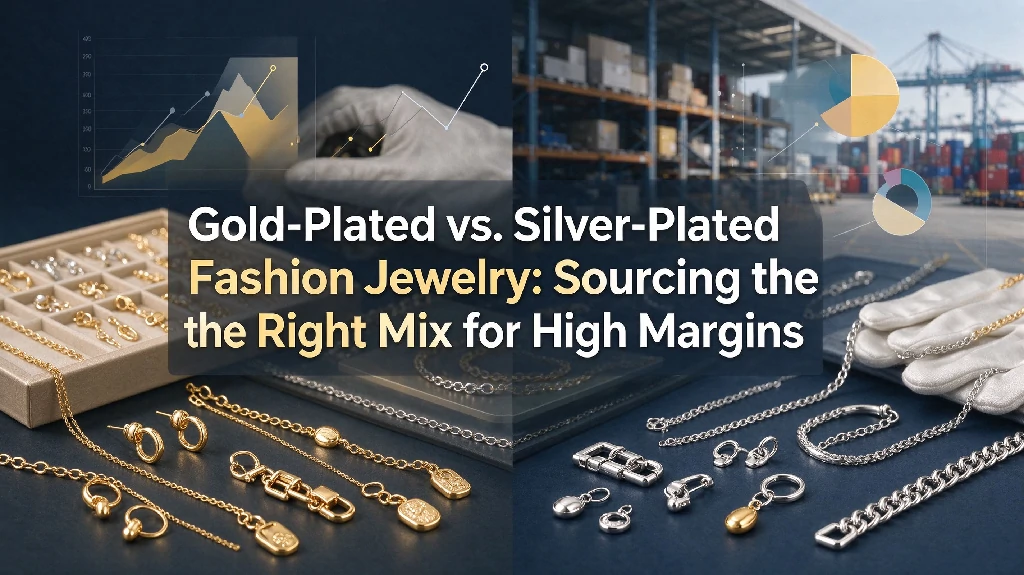
How Plating Metals Shape Cost and Margin
Plating metal choice affects both factory unit pricing and retail price elasticity. Gold bullion prices sit far above silver prices per troy ounce. Even thin gold electroplate adds noticeable material weight to high-volume styles like chunky cuffs or layered chains.
Precious Metal Volatility and Unit Cost Math
Gold and silver market rates fluctuate across quarters. Factories price plating charges using base alloy specs, bath chemistry, surface area, and metal benchmarks. Large hollow hoops or wide cuffs expose more surface area than delicate studs. That extra surface area magnifies plating cost shifts.
Gross margin depends on landed cost per sellable unit rather than ex-works price alone. Add freight, customs duties, packaging, and defect allowances to each SKU. A slightly pricier finish with low return rates often beats a cheap finish with high claims.
Perceived Value and Retail Pricing Power
Shoppers read warm gold tones and cool silver tones differently across seasons and regions. Gold-plated hoops, signet rings, and layered chains often anchor higher retail price points in gift and evening assortments. Silver-plated pieces frequently serve as accessible daily staples or cool-tone seasonal accents.
Test price points across channels before locking bulk quantities. Boutique displays, online storefronts, and multi-pack promotions respond differently to gold versus silver finishes. Track sell-through velocity alongside gross margin dollars rather than percentage margin alone.
Budgeting Tooling and Plating Baths by Order Tier
Small test batches often run on standard bath setups with lower minimum commitments. Larger seasonal runs can justify custom tone matching or dedicated bath cycles. Confirm how plating bath charges scale as order quantities step up.
Review unit margins after factoring in display cards, polybags, and shipping cartons. Packaging weight and volume affect air or sea freight cost per unit. Balanced unit economics keep both gold-plated and silver-plated lines profitable.
Negotiating Tiered Volume Pricing With Workshops
Order volumes rarely stay flat across an entire retail calendar. Ask factories for transparent price breaks at realistic quantity tiers before placing sample orders. Knowing unit costs at 1,000, 2,500, and 5,000 units helps buyers plan reorder triggers cleanly.
Compare total landed cost rather than chasing small per-piece discounts on thin plating. Low-cost runs with frequent returns eat up margin faster than steady runs with clean specs. Disciplined cost math keeps assortments healthy over multiple seasons.
Metallurgy, Base Alloys, and Tarnish Control
A plating layer only performs as well as the base metal underneath. Brass, stainless steel, and zinc alloy behave differently during polishing, electroplating, and daily wear. Choosing the right substrate prevents peeling, flaking, and skin irritation.
Brass, Stainless Steel, and Zinc Alloy Substrates
Brass machines cleanly and takes bright electroplating well. It remains common for fashion rings, earrings, and chains. Stainless steel resists corrosion naturally and adds structural strength for cuffs, clasps, and everyday chains. Zinc alloy suits complex three-dimensional molds like charms, pendants, and sculpted motifs.
Each substrate requires tailored surface prep before plating. Poorly cleaned oil or buffing compound causes pinholes or blistering later. Confirm base alloy grades in writing so factories do not substitute cheaper scrap blends.
Electroplating Thickness, PVD, and Tarnish Resistance
Plating thickness is measured in microns, and thicker layers generally last longer under friction and sweat. Flash plating wears off quickly on high-contact edges like ring bands and bracelet clasps. Medium-to-heavy plating or vacuum deposition (PVD) improves wear life on key pieces.
Silver plating reacts with sulfur compounds in air and skin oils, forming dark silver sulfide over time. Clear e-coating or protective topcoats slow tarnishing on both gold and silver finishes. Buyers should verify adhesion and salt-spray or wear tests during sampling.
Matching Finishes to Wear Environments
Daily-wear necklaces and bracelets face sweat, lotion, and friction against clothing. Event earrings or statement brooches face shorter wear cycles per use. Match plating durability to real customer habits rather than applying one uniform spec everywhere.
High-humidity coastal markets or summer drops often test coating durability harder. Checking sample finishes under tough conditions reduces post-sale complaints. Clear spec tiers help buyers avoid over-engineering low-margin promos or under-specifying core lines.
| Sourcing Factor | Gold-Plated Jewelry | Silver-Plated Jewelry | Margin & Assortment Impact |
| Plating Metal Cost | Higher per-micron cost due to gold price | Lower per-micron cost due to silver price | Gold requires tighter surface-area control on large SKUs |
| Tarnish & Wear Profile | Tones vary by karat shade and topcoat; edge wear possible | Prone to sulfide tarnishing without protective coating | Clear e-coat and proper base alloy cut return rates |
| Typical Assortment Role | Hero styles, gift sets, statement or evening pieces | High-turn basics, cool-tone trends, accessible tiers | Blending both balances ticket size and inventory velocity |
| Sample & Test Focus | Color match, micron thickness, clasp pull strength | Sulfide/tarnish resistance, coating clarity, chain drape | Pre-bulk sample sign-off prevents costly rework after arrival |
Table 1: Operational comparison of gold-plated and silver-plated fashion jewelry for wholesale buyers.
How to Structure Your Gold-to-Silver Assortment Mix
No single ratio fits every brand or retailer. Start with historical sales data, category roles, and customer style preferences. A practical split places core staples at 60% to 70% of volume and seasonal trends at 30% to 40%.
Core Staples vs. Seasonal Trend SKUs
Core staples include everyday studs, classic hoops, clean link chains, and stackable bands. Gold-plated and silver-plated versions of top staples keep replenishment steady across quarters. Trend SKUs capture short-lived shapes, charms, or seasonal colors in controlled quantities.
Keep order quantities tighter on experimental shapes so slow movers do not trap cash. Reorder winners quickly once early sell-through data confirms demand. Disciplined SKU pruning protects working capital across the calendar.
Multi-Category Accessory Pairing for Higher Basket Size
Jewelry rarely sells in isolation inside a well-curated accessory assortment. Shoppers pairing gold-plated or silver-plated jewelry with hair accessories, belts, bags, or hats raise average order value. Coordinated finishes across categories help stylists and online merchandisers build complete looks.
Managing multiple accessory lines works smoother with a unified fashion accessories supply chain. Central coordination aligns sample schedules, carton packing, and export shipments across workshops. Buyers spend less time chasing separate status updates from scattered factories.
Balancing Stock Depth and Reorder Speed
Fast-moving staples need safety stock aligned with factory lead times and shipping transit. Slow-moving trend shapes work better with smaller initial runs and quick replenishment rules. Separating stock depth by SKU velocity prevents excess inventory at season end.
Review sell-through rates every few weeks during active retail windows. Shift reorders toward styles turning fastest rather than spreading budget evenly across laggards. Tight stock discipline protects cash flow for upcoming launches.
Ready to balance your gold-plated and silver-plated jewelry mix and lock factory specs? Contact Yunintl’s sourcing team to discuss your order.
How to Vet Suppliers and Prevent Quality Failures
Plating defects often appear only after transit or weeks of customer wear. Vetting workshops thoroughly before bulk orders protects brand trust and repeat sales. Focus on process discipline rather than polished sample trays alone.
Sample Validation and Counter Sample Standards
Order physical counter samples before approving bulk runs. Check clasp tension, jump-ring soldering, stone setting, and color consistency across pieces. Keep a signed golden sample so factory inspectors measure bulk lots against one clear standard.
Test finish durability under realistic conditions. Check for sharp edges on posts and ear wires, uneven e-coat pooling, or dull patches inside crevices. Fixing tooling or plating notes during sampling avoids expensive rejections later.
Inspection Gates, Nickel Rules, and Packaging
Run inline checks during production and pre-shipment inspections before balance payment. Inspectors verify plating tone, dimensions, count accuracy, and carton labeling against purchase orders. Catching defects at origin prevents chargebacks and warehouse holds.
Check destination compliance rules for nickel release, lead, cadmium, and labeling before shipping. Sealed polybags and anti-tarnish strips help protect plated surfaces during ocean or air transit. Structured jewelry sourcing connects buyers with workshops that follow clear specs and inspection routines.
Handling Reorders and Scaling Capacity
Once a supplier proves consistent quality on initial orders, document approved specs for fast reorders. Lock in color standards, packaging counts, and carton dimensions so repeat runs need minimal re-sampling. Clear records keep seasonal restocks moving smoothly.
Track on-time delivery and defect rates across shipments to guide volume growth. Reward reliable workshops with larger runs while phasing out slow or inconsistent vendors. Steady supplier management supports sustainable assortment expansion.
Managing Returns and Post-Sale Feedback
Even careful buyers encounter occasional customer complaints or store returns. Log defect reasons by SKU, base alloy, and plating finish after each selling cycle. Clear return tags help separate wearer misuse from factory coating or clasp issues.
Share factual feedback with your supplier during seasonal reviews. Targeted adjustments to clasp springs, post thickness, or topcoat curing reduce repeat issues. Steady feedback loops keep quality aligned with brand standards.
Frequently Asked Questions About Gold-Plated vs. Silver-Plated Jewelry
Which finish usually delivers higher gross margin dollars?
Gold-plated jewelry often supports higher retail prices on statement and gift items, lifting gross margin dollars per unit. Silver-plated jewelry can deliver strong margins on high-turn basics when material and freight costs stay tight. Track net landed cost and return rates on every SKU to compare true profit.
How can buyers slow down tarnishing on silver-plated pieces?
Specify protective e-coating or suitable topcoats during sample development. Advise customers to keep jewelry away from moisture, perfumes, and harsh cleaners. Packing pieces in sealed bags with anti-tarnish tabs also helps during storage and shipping.
Should new brands start with custom molds or existing designs?
Starting with existing designs or minor trim adjustments lowers upfront tooling cost and speeds launch. Custom molds make sense once a brand validates demand and plans repeat orders. Balancing both approaches keeps early cash risk manageable.
What details belong on a jewelry tech pack or spec sheet?
Include base metal grade, plating metal and target thickness, protective coating type, dimensions, weight, clasp style, and packaging specs. Clear numbers prevent guesswork between design teams and factory lines. Always attach reference photos or sample notes for color tone.
How do multi-category orders affect shipping and customs clearance?
Combining jewelry with bags, belts, hats, or sunglasses requires accurate HS codes and itemized packing lists. Each material type may carry distinct duty rates or inspection rules at destination. Clear documentation speeds customs release and prevents port delays.
When should buyers test a new plating shade or alloy?
Run color and finish tests well ahead of peak buying seasons or catalog shoots. Testing early gives room for one or two sample revisions without delaying bulk launches. Document approved shades clearly so factories repeat them accurately.
How should buyers handle failed jewelry pre-shipment checks?
Hold shipment when a batch fails agreed defect thresholds or spec checks. Require the workshop to sort and rework affected units before re-inspection. Clear defect photos and written corrective steps keep quality decisions objective.
Partnering With Yunintl for Jewelry and Accessory Sourcing
Founded in 2006, Yiwu Yunintl Supply Chain Management Co., Ltd. connects international brands, retailers, and boutiques with fashion accessories across jewelry, bags, hair accessories, belts, hats, and sunglasses. Operating from Yiwu with a Guangzhou branch, Yunintl supports wholesale gold plated jewelry and multi-category sourcing from product selection and sample development through production tracking and delivery. Buyers gain a dedicated operational partner focused on practical execution.
References
- Gold overview on Wikipedia. https://en.wikipedia.org/wiki/Gold
- Silver overview on Wikipedia. https://en.wikipedia.org/wiki/Silver




